
The CiC badge was one of the factors that made me choose the course. I really like courses that place a strong emphasis on expressing yourself and sharing your opinion in various ways.
I think the CiC course is the most unique course I have ever taken, not only at HKU, but throughout my life.
Key Impact Card
Awards
QS Reimagine Award — Finalist
2024UGC Teaching Award (1st Runner‑Up)
2023HKU Outstanding Teaching Award
2022Impact on Faculty
Badging
Badging changes how communication is taught within a course. The lists below show engagement by Faculty — both the number of faculty members involved and the number of CI‑badged courses.
This badging exercise helps us to reflect on the sequence of the course, and also to reflect on the learning outcomes in general.
After being badged with CiC, the assessments are more inspiring and more fun.
Faculty members involved, by Faculty (2025–26)
TOTAL: 348 faculty members across 9 Faculties
CI‑Badged Courses, by Faculty (2025–26)
+ 3 Cross‑listed Courses (not attributed to a single Faculty, so not shown as a bar)
TOTAL: 403 CI‑badged courses
Changes made to HKU undergraduate courses after CI‑badging
- Added communication skills to course learning outcomes 148
- Improved assessment rubrics 118
- Added in‑class activities, such as workshops, lectures, or tutorials 109
- Created or redesigned assessment tasks 44
- Added out‑of‑class learning support, such as online activities or self‑access materials 40
- TOTAL — courses with at least one reported change 181
A course can report more than one change, so the five changes above don’t sum to the total — the total counts each course only once.
Each CI‑badged application is reviewed by peer reviewers. The chart below shows the number of faculty members involved in CiC application peer review.
Growth in active CiC peer reviewers (2019–20 to 2025–26)
Support
CiC organises professional development events for faculty members annually.
I think every teacher should attend a session like this, as it helps you to reflect on your teaching practices and motivates you for the next semester. I learned a lot about different teaching and assessment approaches.
The speakers were very concise, well selected, and there were different points of view. This was one of the best professional development events I attended.
CiC professional development activities held (since 2019)

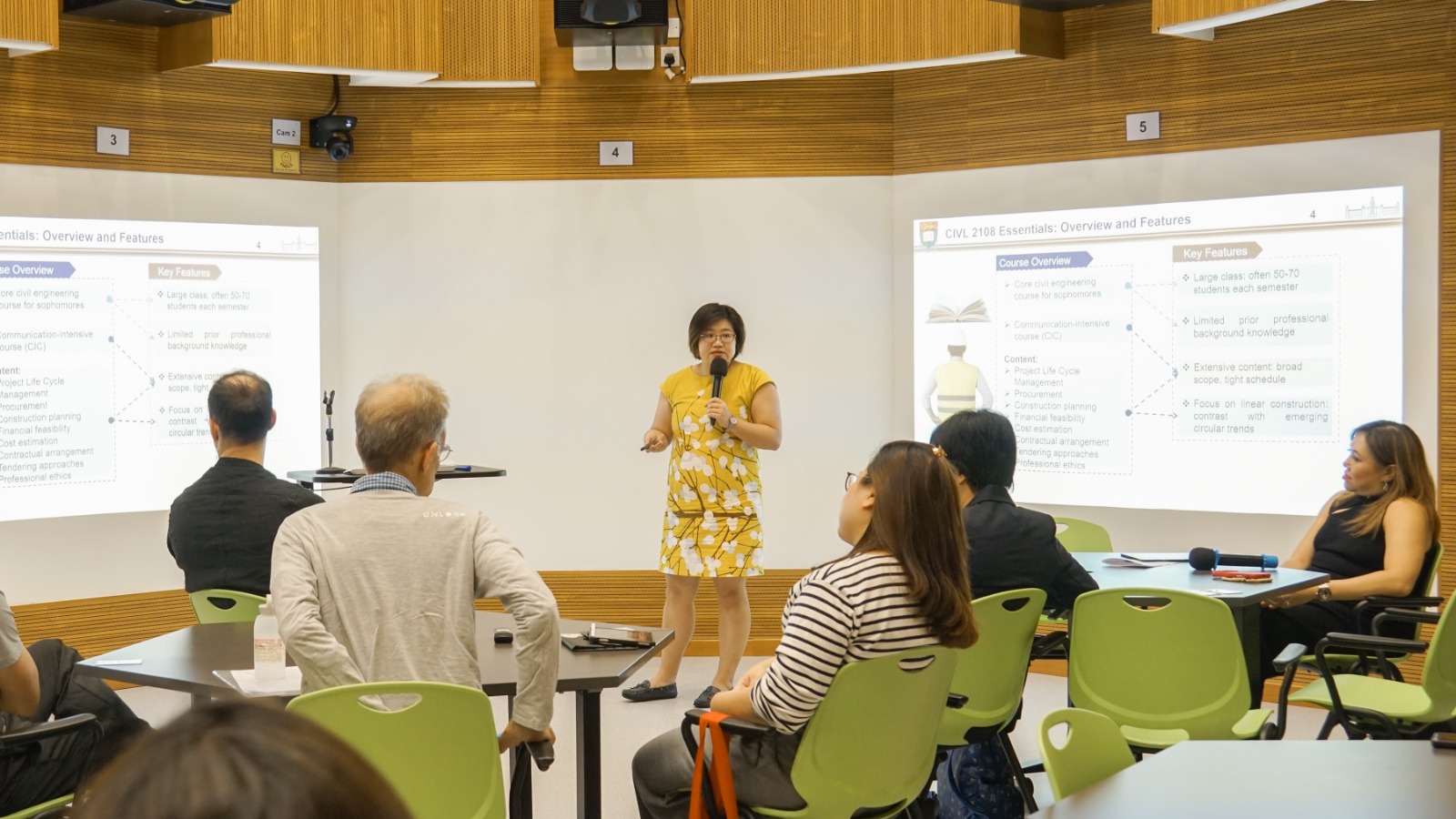
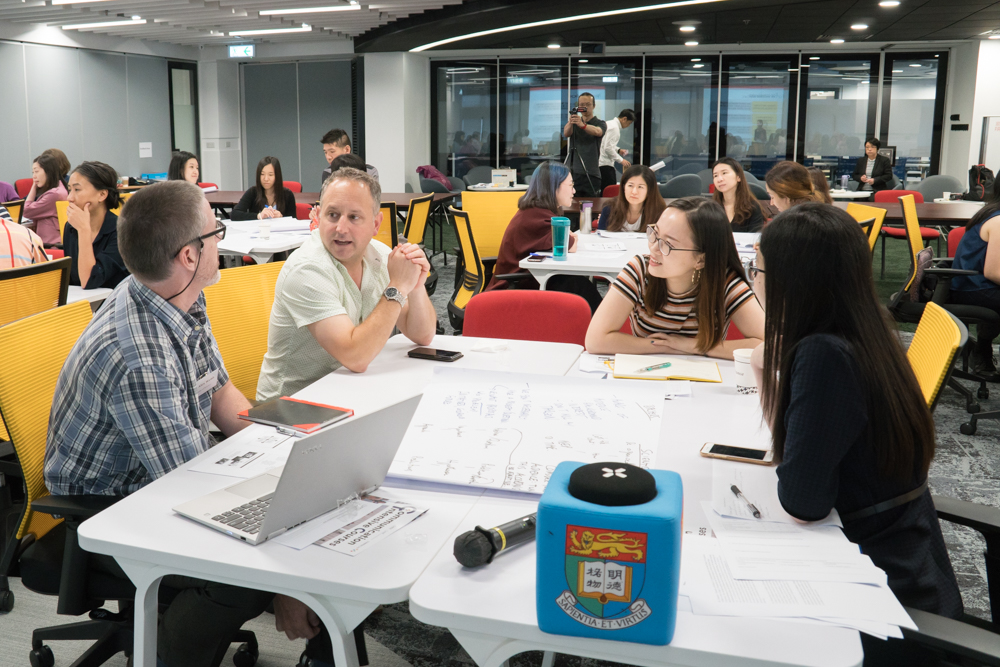

Annual CiC Symposium
Impact on Students
Learning
CI‑badged courses build oral, written, visual, and digital communication into the learning experience. The quotes and chart below show how students describe and rate that experience.
I actually learned a great deal from the CiC course because I learned how professional speakers organize their visual design, and how it really impacts the overall presentation.
After taking the CiC course, I have been more confident about what I think, and being able to communicate my ideas clearly.
The chart below compares students’ self‑rated communication competence across the four core literacies — oral, written, visual, and digital — before and after taking a CI‑badged course.
Student self-rated communication competence, pre- vs. post-course (2025–26)
Effect sizes (Cohen’s d): Oral +0.36 (Medium) · Written +0.36 (Medium) · Visual +0.46 (Medium) · Digital +0.52 (Large). N = 864 pre; N = 201 post, 2025–26.
Support
CiC offers two main channels of support: self-paced micro-courses for independent skill-building, and Visual and Digital Resources (VADR) for in-class visual and digital support, as well as after-class feedback.
Micro-courses
2,235 total enrolments and 29 partnered courses since 2022–23.
I think the content is very effective and very comprehensive.
The course was useful in giving me an idea of what reflective writing is and how to do it properly. Thank you.
-
 Visual Design
-
 Presentation Delivery
-
 How to Film
-
 Reflective Writing
-
 Peer Feedback
-
 Storyboarding
-
 Slide Design
-
 Video Essays
-
 Critical Thinking
VADR
7,500+ students supported and 89 partnered courses since 2022–23.
Amazing and professional — the peer consultants did a great job introducing how to make a poster. Clear and concise.
The hands-on tutorial made it really helpful to apply the learning from the presentation!

About this data: figures reflect CiC’s internal programme records (course badging, faculty member and student participation) and an end-of-course self-rated communication‑competence survey (N = 864 pre-course, N = 201 post-course). Most figures are for academic year 2025–26; cumulative totals are labelled “since 2019” where shown.